Dinnerware Materials 101: What Are Stoneware & Earthenware?
Easy definitions you can remember.
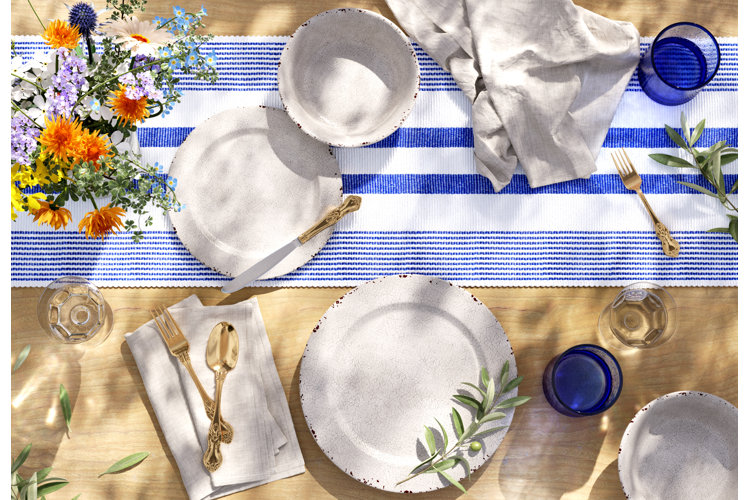
If you're interested in learning more about earthenware and stoneware, you've come to the right place. While earthenware and stoneware are both beautiful and sturdy options for your home, there are some key differences between the two types of dinnerware. Keep reading below to learn more about these two popular dinnerware materials.
What Is Earthenware?
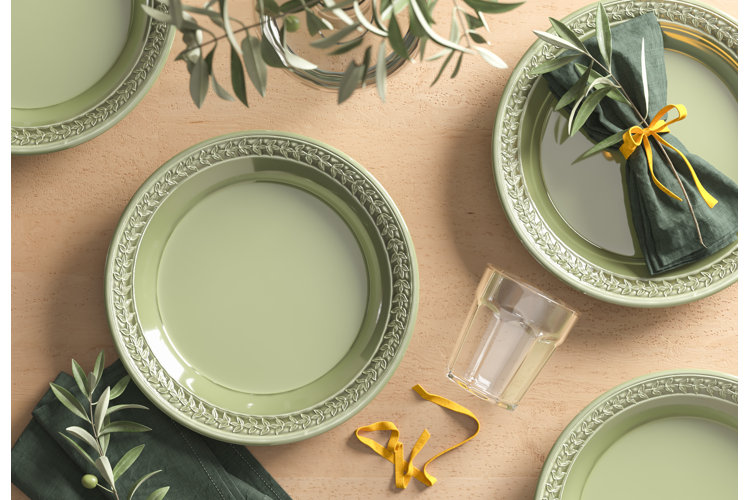
When you think of earthenware, you probably picture a terracotta planter. You're not wrong. Terracotta literally means "baked earth." Earthenware is a crumbly, porous material that comes from underground clay. Because of this, most earthenware pieces are the color of clay: browns, reds, and burnt oranges. However, earthenware can be painted a variety of colors. Earthenware is fired at a pretty low temperature – between 1,300° and 1,200° Fahrenheit.
Because of its pores, earthenware is not waterproof unless it is glazed. Unglazed earthenware is perfect for holding plants. However, glazed earthenware is perfect for the kitchen. In fact, earthenware is one of the oldest industrial materials and has been used on dinner tables for decades. Earthenware plates and bowls are often heavy and have a rustic or artisanal appearance, but they can be prone to chipping, so handle them with care. Most glazed earthenware dishes are dishwasher-safe but not microwave-safe, as they cannot handle extreme changes in temperature. Some glazed earthenware pieces are oven-safe. Check the care instructions on your earthenware to learn more.
Since earthenware and stoneware are similar, we group them together under the "Materials" section on-site. To ensure your plates, platters, or bowls are earthenware, please read the product description.
Stoneware is a lot harder and denser than earthenware. It has a sandy, textured appearance and is the color of stone – hence the name stoneware. It often has a clean, modern look, making it easy to mix and match with table decor and other dinnerware or serveware. Stoneware is not porous the way earthenware is, which makes it even more durable. It is fired at very high temperatures – between 2,100° and 2,400° Fahrenheit. Once stoneware is fired in a kiln it becomes waterproof, so it does not need to be glazed.
Stoneware tends to chip rather than break, so it will last for a very long time. Its durability also makes it perfect if you have children or grandchildren, as it isn't prone to shattering. Most stoneware is naturally microwave- and dishwasher-safe. But again, check the care instructions on your stoneware to learn more.
As we mentioned earlier, we group earthenware and stoneware together under the "Materials" section on-site. So to ensure your plates, platters, or bowls are stoneware, please read the product description.
Pro Tip:
Not sure if a piece of pottery is earthenware or stoneware? Flick your fingers on the exterior of the piece. If you hear a ringing sound, that means it is stoneware and it has been fired completely. If you hear a dull thunk, that means it is earthenware and has not been fired fully.
Ready to browse?
